The packaging process is one of the most important stages of the production flow in various industries because it is responsible for containing the product (wheat grain), preserving its quality and providing protection during transportation and storage. Therefore, it is essential to have a processing that meets the fundamental requirements to provide a quality product.
Currently, there are many packaging techniques that allow achieving the same objective. Automatic packaging has been able to develop over the years, becoming a vitally important equipment in the operations of large industries as it provides several benefits such as higher productivity, agility, adaptability, lower costs and errors.
In this work, an automatic packaging machine will be designed and manufactured in order to increase the productivity and efficiency of bag filling and sealing activities.
In Chapter 1, the general problem and the specific problems were presented, together with the objectives to be achieved and the justification for the project.
Then in chapter 2 the theoretical framework was developed, where the background of the research was reviewed, as well as the theoretical bases related to the terms used in this project.
Chapter 3 explained in more detail what the project consisted of and the stages that were planned and carried out in order to achieve the proposed objectives.
Chapter 4 presents the explanation of each stage developed, starting with the preliminary design and ending with the testing of the machine. Also, the techniques, parts and instruments used during the project and the results obtained are defined.
Finally, the conclusions and bibliographic sources consulted are presented.
In this project we will elaborate the automation of an object transport and storage process by designing and building a product classification system with a conveyor belt and optical sensors.
The automation is intended to be implemented in the Winflex company, providing support in the sorting and packaging process. For this purpose, we define the processing processes, characteristics of the station, sketch, project diagrams and production indicators.
In the following chapters we will see the theoretical foundation that involves the project along with its objectives. We will also mention the detailed description of the process that we want to automate, attaching diagrams that will facilitate the understanding of the current process, on the other hand, we will see the production indicators, quotation and the outline of the automated process.
We will mention the detail of the design proposal to automate the process, we attach diagrams that will help the understanding of the automated process, along with the detailed description of the materials used, the design of the electro-pneumatic circuit and the PLC programming.
In this research project, we present a project that aims to teach and disseminate the correct way to recycle waste. However, in our country there are enormous opportunities to increase recycling, since only 1.9% of the total solid waste generated is recycled, which can be used in different ways.
Today, recycling is a global necessity not only to improve the quality of the environment, but also to protect human health. In addition to employment, recycling paper, plastic, glass and metals, among other things, saves raw materials extracted from nature and thus extends
the life of landfills in our cities, where every day there is less space for solid waste, requiring the introduction of new processing technologies and proper waste management.
On the other hand, we will touch important points for the quotation of the materials to be used and the most feasible ways where we made the acquisition of these, after defining and knowing the functions of each piece to be used, we will make a sketch where we will have a preview and an important guide to start our work.
The increase in automation is a growing trend in correlation with technological progress. This is reflected in the day to day, and mostly its use in the industrial sector. Likewise, pollution is a daily thing, and it is also growing. That is why our project is focused on environmental care and promotion of recycling. The project consists of the development and manufacture of a can recycling machine. This project seeks to offer the
market a system that can be used in any space, whether in industries, shopping malls, supermarkets, offices, homes, bars, streets, among others. The difference of this machine, with a garbage can, is that it will no longer be necessary to go to store and crush the can in another area.
By using this can recycling machine, we improve the efficiency, effectiveness and reduce the transformation time of the cans; since in the same place where the cans are deposited, they will be crushed and stored for sale or recycling.
In this project, we will have a research, embodied in various diagrams that substantiated in detail the creation, sequence and improvements (through production indicators) that will lead to the use of this product.
In this project we will try to develop a program that, with the help of a programmable microcontroller such as PLC, performs actions automatically such as: Receiving process, stamping process and finally the storage process of the already stamped wood pieces.
To achieve this goal the PLC will be the most efficient device because its technical specifications give us the great advantage of being very user friendly so that when programming, or translate ideas from a physical medium to a digital medium LADA programming language would be the most friendly providing a vast amount of utilities, which after reviewing your user manual will be even easier to understand and develop the needs we have.
After outlining the process we want to carry out, we will proceed to programming, which will allow us to establish time parameters, as well as to see in a general way the process we are carrying out, generating a constant automation, which in the long run will cause that the benefits will be greater and the optimization of the process we are carrying out will be achieved.
As an initial point, the simulation of our process will be carried out with the help of Autodesk Inventor software, where after collecting information from previous works with similar operations to ours, we carried out the structuring of the same and with this we found the best arrangement for each of the elements and devices that we will use in the process. Then we carried out the structuring of the processes and for continuous improvement, we used DOP and DAP diagrams in which the inputs, outputs and processes involved in the sealing of the boxes are considered, which will then be used for programming in LADA in the PLC.
The objective of this work is to improve the automation of a drilling machine, which will drill a part in 4 points of equal distance. In order to make this proposal, a study of the current process of the process, which is performed entirely manually, was previously made. To perform the current process the worker must first mark the correct location to the point to which you want to drill, then place on the drill table a drill, which must be aligned using the view to then make the drilling process. As can be identified this process is simple and repetitive, but at the same time it requires a lot of precision. The proposal is to design a machine that performs this process automatically.
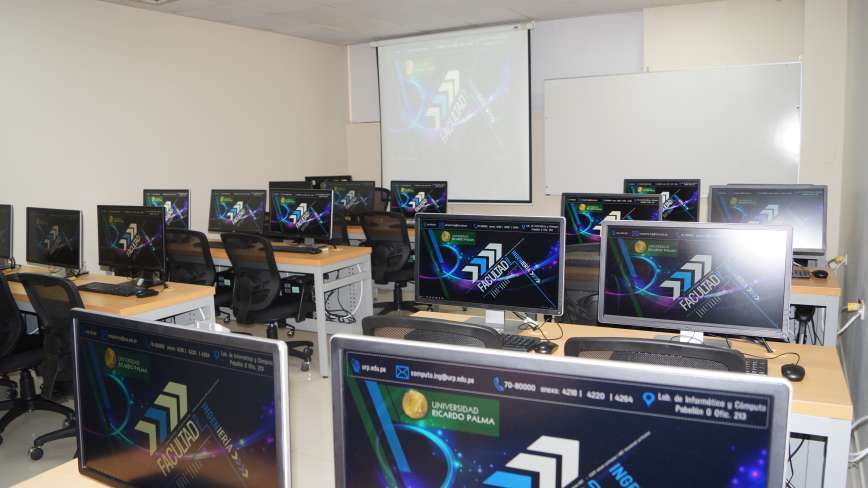
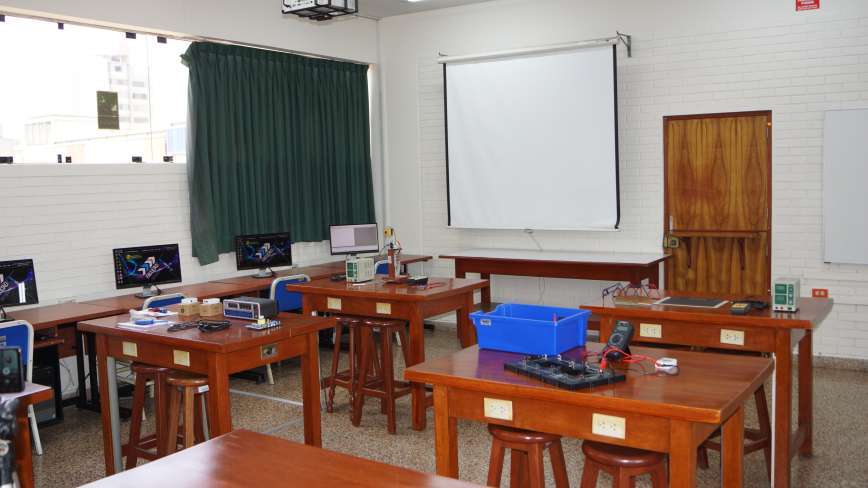
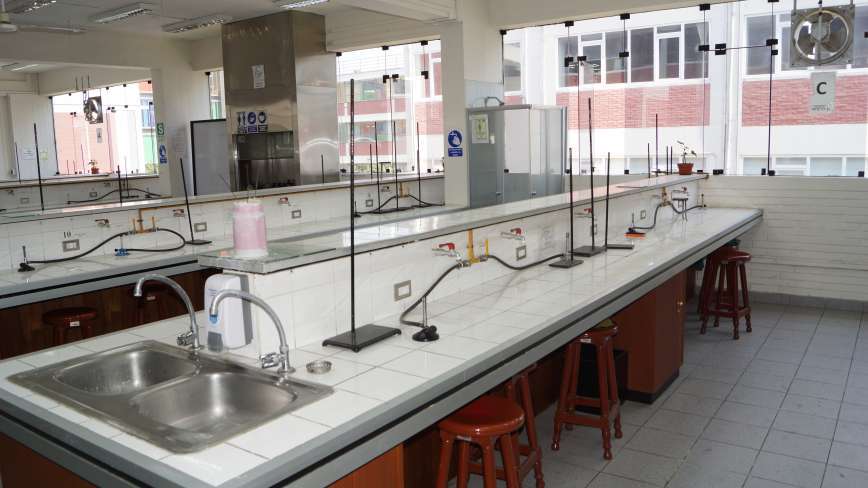
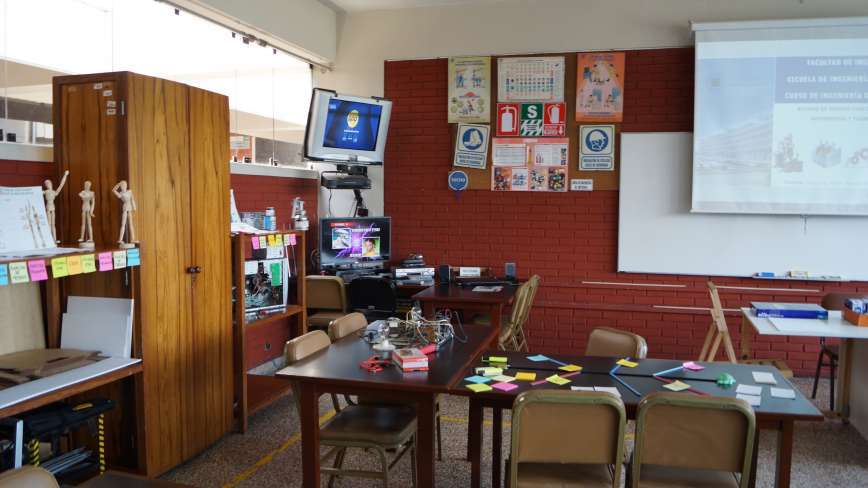
This research has been developed at the Faculty of Engineering of the Ricardo Palma University, considering our objective to automate the process of classifying bottles according to their size. Formerly many companies worked manually the process of classification of bottles, however with the advancement of technology this has been able to change that is why we decided to make a bottle sorting machine according to the size of each one; another objective of the project is to reduce time in the classification of bottles and thus be able to increase the productivity of the process.
Currently in Peru there are a few companies that are automated which is a problem because it generates a delay in daily production and productivity, although it is true that the automation of a company is not cheap in the long term investment is justified because by reducing labor and margin of human error will avoid personnel costs. The objective of this work is to study and analyze the transport of material by a conveyor belt, analyzing the margin of error, costs and productivity of the machine, as well as to propose and motivate future companies to implement this machine.
The objective of this study is to determine whether the proposed implementation of an automated sealing system in the avocado selection line will result in increased productivity in the organization, for this reason a methodological scheme was proposed in which we proceeded to assemble the project with the respective components. In addition, we made use of various softwares such as SolidWorks for 3D visualization, LOGO Soft Comfort V8.3 for programming the pneumatic system and Promodel for process simulation.
In order to achieve this, first a diagnosis was made by means of the study of the current situation, by means of a flowchart operations diagram, process analysis diagram, Gantt of the automation plan, process design by means of the 3D CAD drawings; secondly the proposed process is carried out with the processes already mentioned, where additionally the representation of the simulation in Promodel was used for the design of the electro-pneumatic circuit of the process, to finally implement the programming in Ladder language of the process.
As for the automated operation and PLC programming of the system, efficiency and effectiveness were achieved in the project, also thanks to the design of the automated system in the avocado hass sealing stage; it was possible to improve the productivity indicators. Finally, the validation tests and the results of the analysis used in the evaluation of the proposed solution are shown.
The project to be carried out has the purpose of transforming a process within the companies in which it has as a manual procedure what is sealed and distributor of boxes, the current situation of these companies is that they have difficulties and delays to carry out a correct process of them, the boxes are not sealed well or a good distribution is not given in which the box can have as a consequence damage to the interior, dents, scratches, delays and that causes the final customer to be harmed at the time of receiving it.
The elaboration of a prototype that manages to automate the sealing and distributor of boxes, corresponds to the project to be carried out within the Industrial Automation course of the Industrial Engineering career belonging to the Faculty of Engineering at the Ricardo Palma
University.
The purpose of this project is to make management more efficient by reducing time, waste, customer complaints, among others; seeks to guarantee good quality and efficiency in the proper functioning of the box sealing and distributor project.
This project will be made up of the following parts: Solenoid valve, optical sensor, PLC, pneumatic cylinders and power supply.
In this project we will simulate the process of drilling and reaming plates, both metal and wood, through cylinders, for this, it was carried out with the help of the teacher, the design of a drilling module and its subsequent construction using pedagogical seen in classes, the result of said project will be shown in a detailed 3D CAD model of the aforementioned machine. Consequently, taking the knowledge acquired about the drilling and stirrup machine, it is proposed to carry out a process of the current situation and improvement through hand sketches and
process simulations.
First, we will analyze the objectives to be met, the purpose of the work and the methodology that we will use during its development. As a start we need to retrieve information about the manufacture of this machine. Therefore, we will do bibliographical research with the vision of finding books, manuals and websites that serve as a guide throughout the process.
We will thus find the steps that are followed when developing a machine of this type. On the other hand, we will detail the manufacture of its components from the parts and the assembly of the components in question. We will explain what are the operations that take place in the final components and modules of the drilling and reaming machine.
Finally, the programming of the PLC was carried out in the LOGO software, validating the correct operation of the cylinders by means of an air compressor.